
What another season of ignoring this actually costs you
Skip garage door prep one more hurricane season and the bill isn't hypothetical. A door that buckles under wind pressure doesn't just need a repair afterward — it lets wind and rain straight into your garage, which pressurizes the space and can push upward on your roof deck from the inside. That's how a cracked panel turns into a lifted section of roof, soaked drywall, ruined storage, and a much bigger insurance claim than a new spring or a set of reinforcement struts would have cost. Every year you put this off, you're betting a full roof and interior repair against a half-day of garage door work.
Why the garage door is the weakest wall in your house
Every other wall in your home is a solid, continuous structure. The garage door is a large moving panel made of thin steel or aluminum sections, held in place by tracks, rollers, hinges, and springs — not poured concrete or load-bearing studs. In a straight-line wall, wind just pushes against solid material. Against a garage door, wind can flex the panels, pop rollers out of track, or blow the whole door inward if it isn't rated or reinforced for the load. Once that door fails, wind gets inside the garage and starts pushing on the ceiling and walls from a direction they were never built to resist. That's why building codes in wind-prone areas treat garage doors as a structural component, not just an appliance.
Older doors, especially single-layer steel doors installed before wind-load standards were common, are the most vulnerable. If you don't know whether your door is wind-rated, that uncertainty is worth resolving before storm season peaks, not during a watch.
Signs your current door won't hold up
- Visible flex when the door is closed and you push on a panel from outside.
- Loose or missing track brackets — wiggle the tracks by hand; they shouldn't move.
- Rust at the bottom panel or hinges, especially on homes closer to the coast where salt air accelerates corrosion and weakens the metal faster than inland homes see.
- Swollen or sticking panels on wood or composite doors, a common symptom after a summer of humidity and afternoon downpours.
- A single torsion spring with no backup, or springs that look stretched, rusted, or mismatched in size.
- No horizontal struts braced across the back of the panels — these are what actually resist wind pushing the door inward.
What to do before the next storm, not during the watch
- Inspect and tighten hardware. Check every bracket, hinge bolt, and roller. Vibration from wind and daily use loosens fasteners gradually; a wrench and twenty minutes catches most of it.
- Add or verify reinforcement struts. Horizontal steel struts bolted across the inside of each panel dramatically increase the door's resistance to wind pressure. Retrofit kits exist for this reason — it's one of the highest-value upgrades for an older, non-rated door.
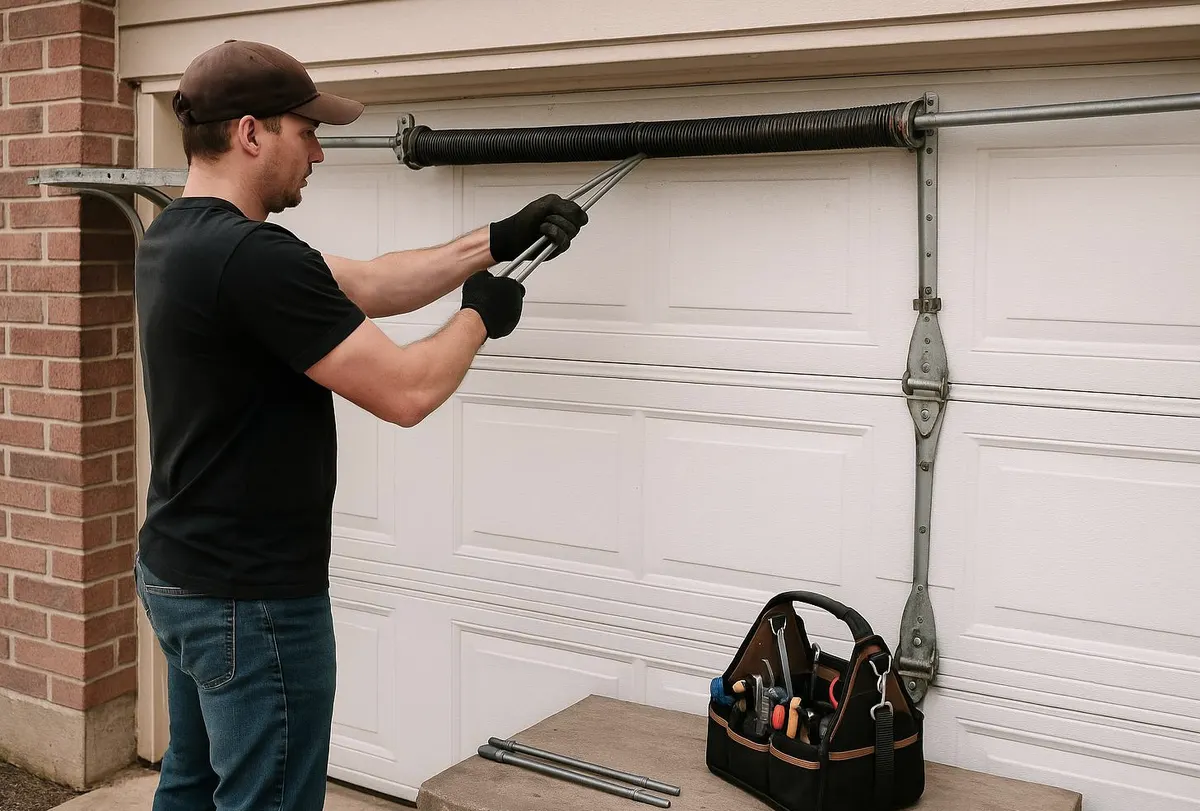
- Replace aging springs before they fail, not after. A spring that snaps during a storm leaves your door stuck in whatever position it was in, which is a problem whether that's open or closed. If a spring looks worn, rusted, or original to a decade-old door, replace it on your schedule, not on the storm's.
- Check weatherstripping and the bottom seal. Humidity and heavy rain find every gap. A failed seal lets wind-driven rain pool against the base of the door and under panels, which speeds up rust and interior water damage during the afternoon downpours this area gets even outside of named storms.
- Confirm the opener has a battery backup. Power often goes out before or during a storm. Without backup power, you can't close the door remotely or override it easily if you're not home.
- Clear and lubricate the tracks and rollers. Salt air near the beaches and general coastal humidity cause buildup and corrosion that make a door bind or run unevenly — exactly when you need it moving smoothly and sealing fully.
If you're on or near the coast
Homes in Atlantic Beach, Neptune Beach, Jacksonville Beach, and Fernandina Beach deal with salt air on top of everything else. Salt accelerates rust on springs, hinges, and track hardware well beyond what inland homes in Middleburg or Fleming Island typically see. If you're coastal, shorten the interval between hardware inspections and don't wait for visible rust to act — by the time it's visible on the surface, it's usually further along underneath.
When to call Jacksonville Door Systems
If you've spotted panel flex, rust at the hinges, a door that's heavier or louder than it used to be, or you simply don't know if your door has wind-load reinforcement, that's the point to call rather than guess. We handle garage door maintenance visits that check hardware, tracks, and seals before storm season peaks, and we handle spring replacement on the spot when springs are worn, mismatched, or at risk of failing under load. If your door is old enough or damaged enough that reinforcement isn't practical, we'll walk you through installation options rated for this area's wind requirements instead of patching a door that's already past the point of a good fix.
If you're in Jacksonville, Orange Park, or anywhere along the beaches, don't wait for the next system to find out your garage door is the weak point. Call Jacksonville Door Systems today and get it checked before the wind does.